
Why Fire Ant Mounds Get Bigger in Late Summer (and the Best Window for Fire Ant Control)
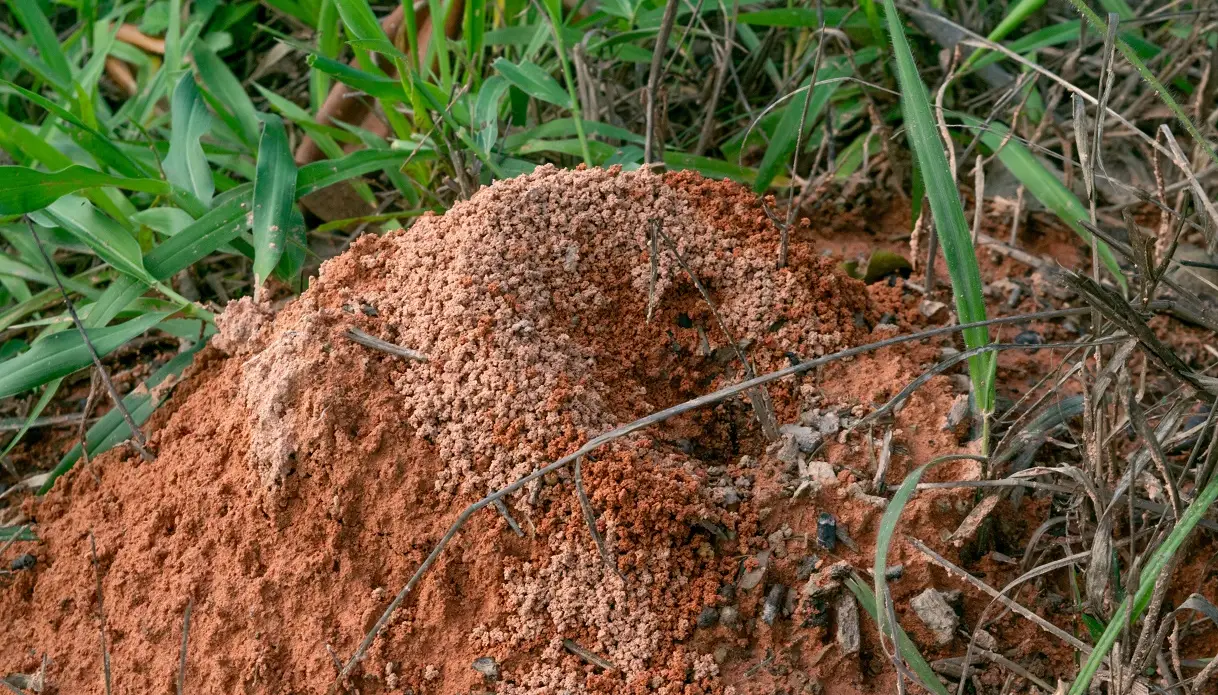
You mowed last weekend, and the yard was fine. It rained Tuesday. Now six mounds along the fence line look like they’ve been there for months.
Fire ants didn’t move in overnight. They’ve been under that grass all summer. What changed is the weather – and understanding why the mounds suddenly swelled tells you exactly why the next several weeks are the single best window for fire ant control all year.
Here’s what’s happening below the surface, what to do about it, and the one mistake that makes the problem worse.
Why Fire Ant Mounds Get Bigger in Late Summer
The mound is not a pile of dirt. It’s a climate-control device.
Mississippi State University Extension describes the structure as “an above-ground mound that can collect warmth from the sun and provide drier conditions and an underground series of galleries that provide cooler, moister conditions.” The colony’s job is keeping the brood at the right temperature and moisture level, and it does that by physically relocating them: fire ants are “continually moving brood to the area of the nest that provides the most suitable environment.”
That gives you the whole seasonal pattern in one sentence. During a hot, dry Texas July, colonies “stay deeper in the soil, so they can keep the brood cool and moist” – sometimes disappearing from view entirely. When conditions turn cooler and wetter, workers “build the mound high above the soil, so they can keep the brood warm and dry.”
So the late-summer swell isn’t a population explosion. It’s construction. The colony was always there. It just moved upstairs.
The Mound Is Not the Colony
This is the part that costs homeowners the most time and money.
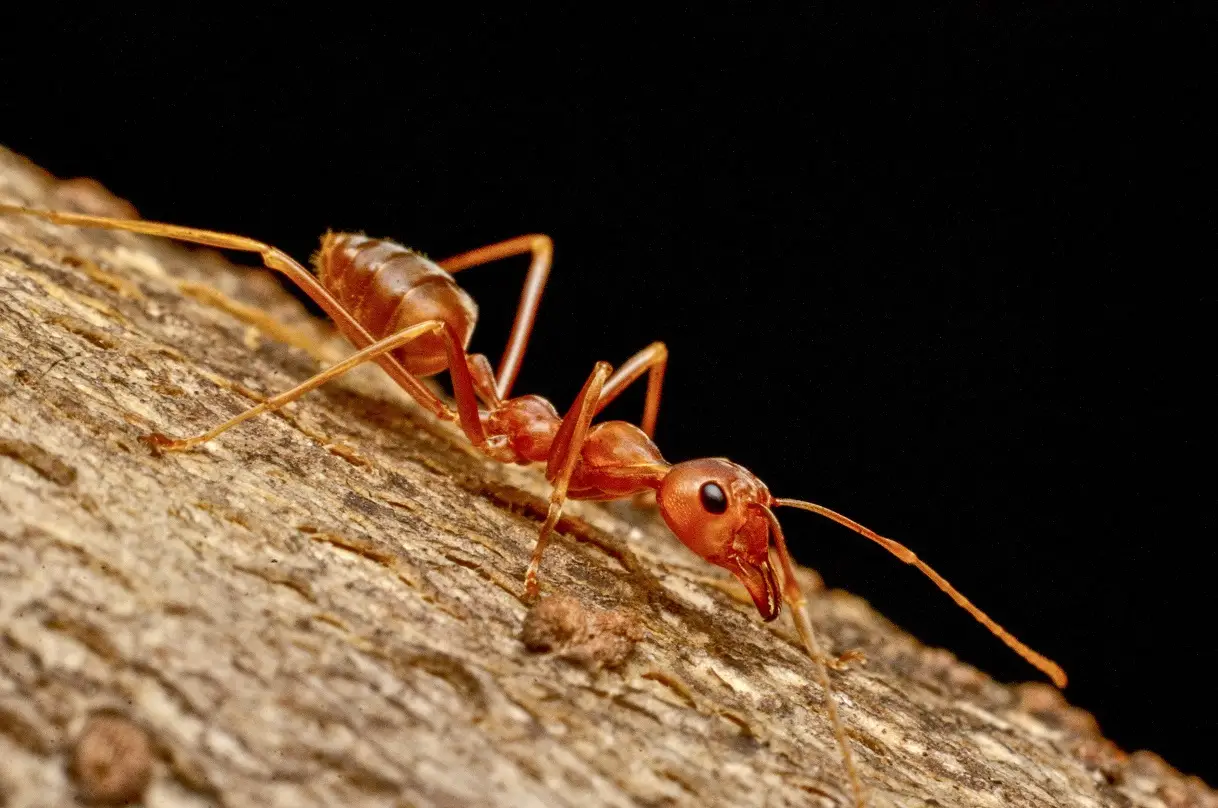
Texas A&M’s fire ant program notes that mounds are “rarely larger than 18 inches in diameter.” Meanwhile, a mature colony “may contain over 200,000 individuals,” and its foraging tunnels run just below the soil surface, exiting the ground “within five to 20 feet” of the mound.
The visible mound is the tip. Underneath and radiating outward is a network you can’t see, with a queen somewhere in it laying continuously. Kill everything in the mound and leave the queen alive, and the colony rebuilds – often a few feet away, which is why so many people are convinced fire ant mounds “move” after treatment.
Effective fire ant control has to reach the queen. Everything else is cosmetic.
Why Mounds Appear Overnight After Rain
Rain does two things at once.
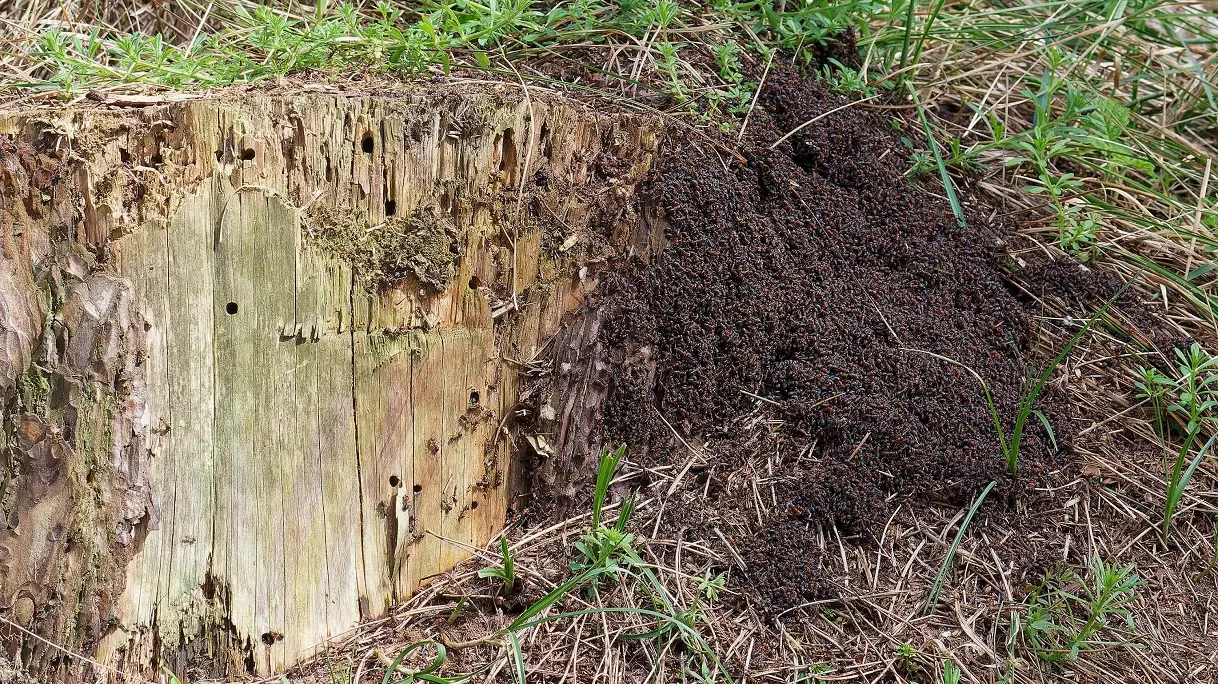
It softens soil, making excavation easy – a colony can push up a substantial mound in a matter of hours when the ground is workable. It also floods the lower galleries, forcing workers to move brood upward and rebuild higher to stay dry.
The mounds that “appeared” the morning after a storm were mostly built that night, by a colony that had been living under your lawn since spring.
What Happens When It Finally Cools Off
The mounds flatten. The ants don’t die.
As soil temperatures drop, the colony retreats deep and goes largely dormant. The mound erodes, gets mowed over, and the yard looks clean by December. Come March, the same colony resurfaces – larger, because it spent a full season growing.
That’s the trap in the “wait it out” approach. The disappearance is seasonal, not permanent, and treating a dormant colony in January accomplishes very little. Which brings us to timing.
Late August to Mid-October Is the Best Fire Ant Control Window in Texas
Texas A&M AgriLife’s fire ant program recommends broadcasting bait “sometime between late August and mid-October.”
The reasoning is straightforward. Fire ant baits are food – AgriLife describes them as “pesticides on processed corn grits coated with soybean oil.” Bait only works if workers find it, carry it home, and feed it to the queen. Right now colonies are foraging aggressively to build reserves ahead of winter, and workers are active near the surface rather than hiding from midday heat.
You are, in short, offering food to a colony at the exact moment it’s most motivated to collect it. No other point in the year lines up this well.
The Texas Two-Step Method
AgriLife’s recommended approach for yards is two stages, and the order matters.
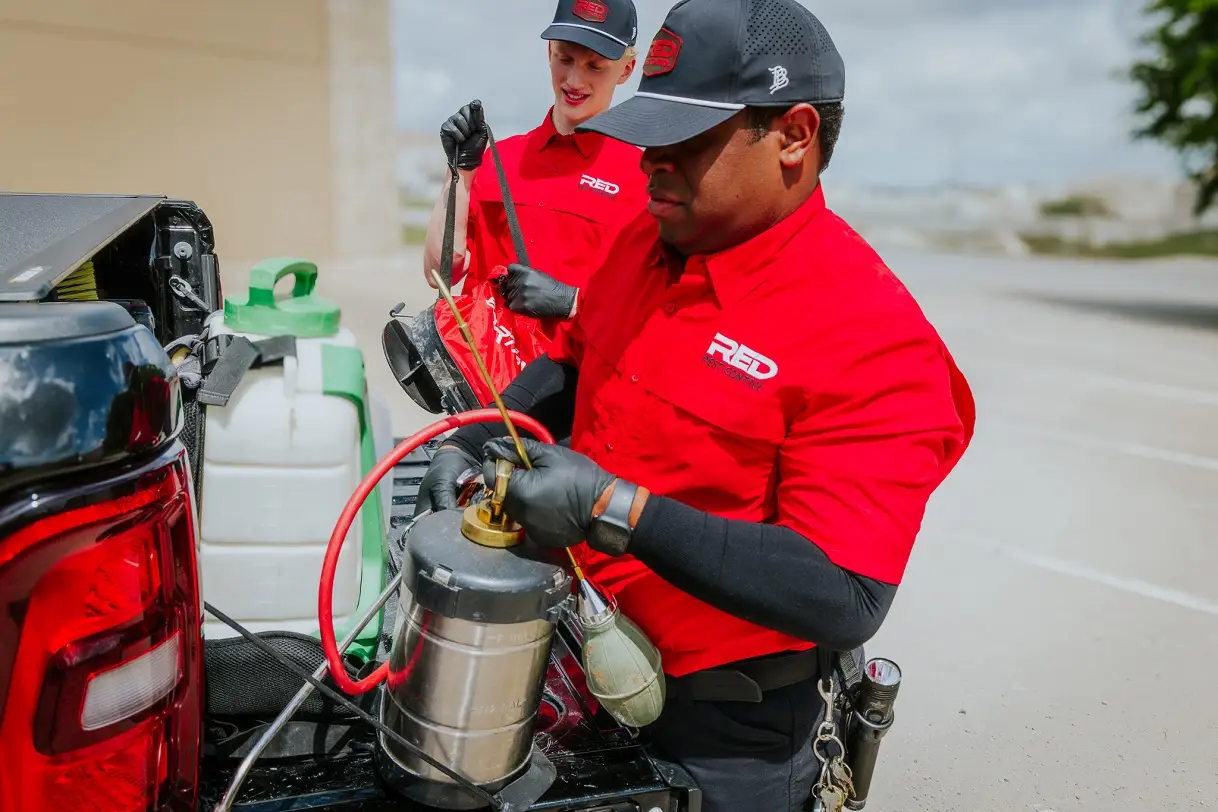
Step 1 – Broadcast bait across the entire yard. Not on the mounds. Across everything. Foraging workers from colonies you haven’t spotted will find it and carry it back.
Step 2 – Treat the remaining problem mounds individually with an approved mound drench, granule, bait, or dust. Liquid drenches “generally eliminate mounds within a few hours.”
Application details that determine whether Step 1 works at all:
- Use fresh bait, “preferably from an unopened container” – the soybean oil goes rancid, and ants ignore it
- Apply when the ground and grass are dry, with “no rain expected for the next 24 to 48 hours”
- Go out in late afternoon or evening, when foraging is heaviest
- Be patient. AgriLife is direct that “baits are slow-acting and require weeks to months to achieve 80% to 90% control”
- Re-apply once or twice a year
That last point is where most DIY attempts fall apart. People broadcast bait, see live ants a week later, decide it failed, and switch to something faster that only kills workers.
What Not to Do to a Fire Ant Mound
Gasoline. AgriLife’s guidance is blunt: “Don’t do it! It probably does not kill the entire colony much of the time; it is dangerous to handle, it kills any plant material it touches.” It also contaminates soil and groundwater. No version of this works out.
Boiling water, as your main plan. Roughly 3 gallons of very hot water “will eliminate ants about 60% of the time,” and it kills the grass and plants it touches. Reasonable for one mound by a walkway. Not a yard strategy.
Kicking or disturbing the mound. It provokes a defensive swarm and can prompt the colony to relocate before treatment reaches the queen.
Treating only what you can see. If you skip Step 1, you’re treating the mounds you noticed while every unmarked colony in the yard keeps expanding.
Fire Ant Stings: What’s Normal and What Isn’t
A fire ant sting burns immediately and typically forms a white pustule within a day. Irritating, but normal – leave it alone and keep it clean.
The exception matters. AgriLife notes that about 1% of people “are hypersensitive to ant venom and will experience lethal allergic reactions.” Watch for excessive swelling, spreading itching or redness, difficulty breathing, or dizziness, and seek medical care immediately if any of those appear.
This is the real argument for handling fire ants proactively rather than seasonally. Mounds along a walkway, near a play set, or beside where the dog sleeps are a genuine safety issue, not just a lawn nuisance.
Keeping Fire Ants Out of the Yard
- Keep grass mowed and thatch thin – dense thatch shelters foraging tunnels
- Fix irrigation leaks, clogged downspouts, and low spots that stay damp
- Move woodpiles, landscape timbers, and stacked pavers off bare soil
- Keep pet food indoors and secure outdoor trash
- Walk the perimeter after every heavy rain and mark new mounds before mowing over them
- Coordinate with neighbors when you can – colonies cross property lines freely, and a treated yard next to an untreated one gets re-invaded
Fire Ant Control FAQs
Why do fire ant mounds get bigger in late summer?
Cooler, wetter conditions prompt workers to build the mound higher to keep the brood warm and dry. In summer heat and drought, the colony stays deep underground, and the mound flattens. The population isn’t growing overnight – the colony is just building upward.
Do fire ants die off in the winter?
No. Colonies move deep into the soil and become largely dormant as temperatures drop. The mound erodes and disappears from view, but the queen and colony survive and resurface in spring, typically larger than the year before.
When is the best time to treat fire ants in Texas?
Texas A&M AgriLife recommends broadcasting fire ant bait between late August and mid-October, when colonies forage aggressively ahead of winter and are most likely to carry bait back to the queen.
Why do fire ant mounds keep coming back after I treat them?
Most likely the queen survived. Treating only the visible mound kills workers while leaving the reproductive center of the colony intact, and the colony rebuilds nearby. Fire ant control has to reach the queen, which is why broadcast bait comes before individual mound treatment.
Handle It Before the Mounds Flatten
The window AgriLife points to closes in mid-October. After that, colonies drop deep, bait stops getting collected, and you’re waiting until spring – facing a colony that spent an extra season growing.
Red Pest Control provides ant control for fire ants and other species across Fort Worth, Dallas, Arlington, Eastland County, and the greater DFW Metroplex, with same-day service available. Every property gets an assigned technician who learns your yard – where the colonies are, which fence line they’re crossing, and what the soil and irrigation are doing to help them. Our treatments are family and pet safe, we’re fully licensed and insured, and we work on a handshake with no contracts. We don’t just treat symptoms. We solve the problem at its source.
Call 817.865.5251 or request a free quote, and we’ll get the yard handled inside the treatment window.