
Why Mice Move Indoors as It Cools – and How to Get Rid of Mice Before They Nest
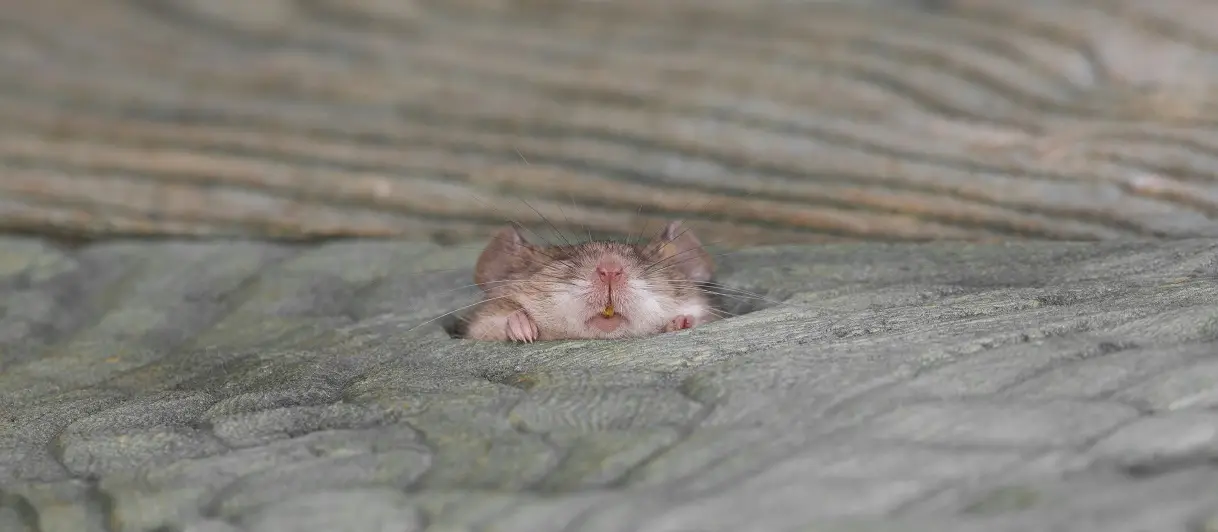
It usually starts at night. A scratching sound in the ceiling around 2 a.m. Something moving inside the wall behind the pantry. A few dark specks along the baseboard that weren’t there last week.
By the time you hear it, they’ve been inside for a while. Rodents don’t announce themselves – they find a gap, move in, and stay quiet until the population outgrows the space.
Late summer and early fall is when this shift happens across North Texas, and it’s the last stretch where prevention still works better than removal. Here’s why they come in, what to look for, and how to get rid of mice before one pair turns into a real problem.
Why Rodents Move Indoors as Temperatures Drop
Unlike a lot of fall pests, rodents genuinely are seeking your house out.
This is worth saying clearly, because the opposite is true of most seasonal pests. Spiders showing up in fall aren’t fleeing the cold – they’re cold-blooded and indifferent to it. Mice and rats are warm-blooded mammals with a real problem to solve. As nights cool and outdoor food supplies thin out, your home offers all three things they need in one place: stable warmth, reliable food, and undisturbed nesting space.
Your attic insulation is better nesting material than anything available outdoors. Your pantry is a food source that never runs dry. Your wall voids are predator-free. From a rodent’s perspective, moving in is an obvious upgrade.
The Rodents You’re Actually Dealing With in North Texas
Three species account for nearly all residential and commercial rodent problems here, and they behave differently enough that it changes where you look.
House mice are the most common by a wide margin. Texas A&M AgriLife notes they nest in odd, tucked-away places – “under a pile of paper sacks, in loose or baled hay, inside upholstered furniture.” Small, curious, and content to live within a few feet of a food source.
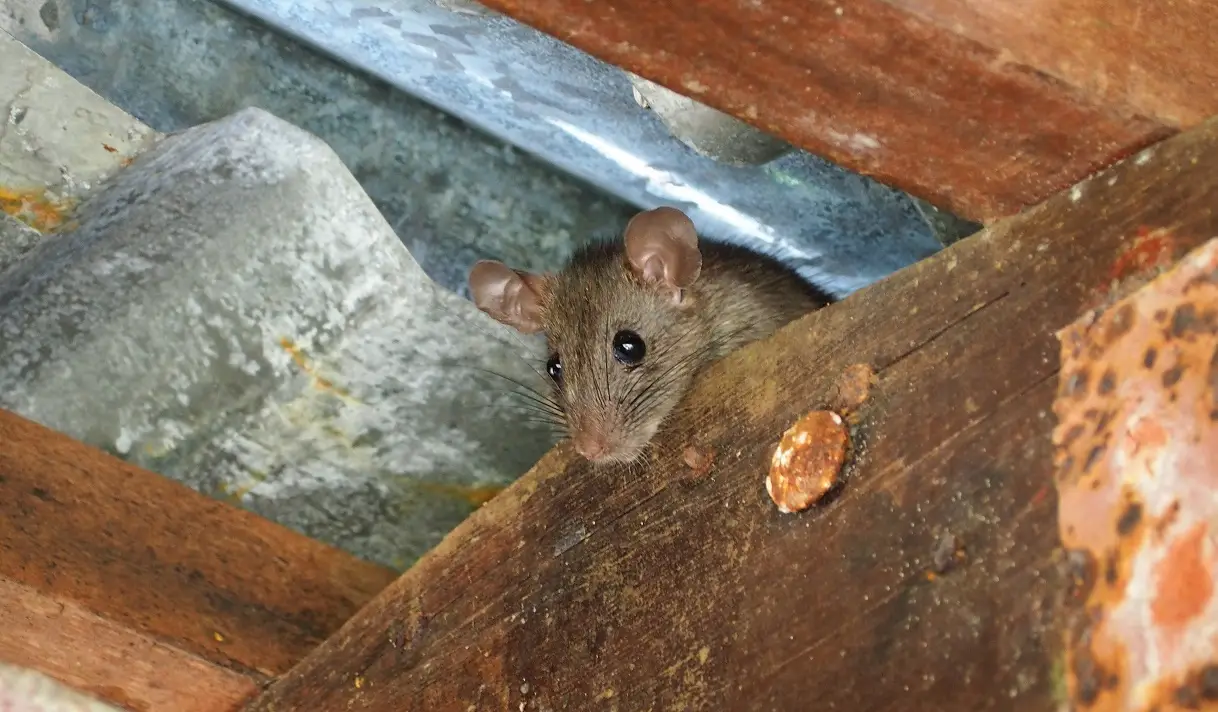
Roof rats are the ones people hear before they see. AgriLife describes them nesting “in double walls and attics.” They’re excellent climbers, entering along tree limbs, power lines, and roof lines rather than at ground level. If the noise is above your head, this is usually the culprit.
Norway rats work the opposite direction. They “burrow under foundations, floors, stacks of goods and rubbish” – ground level, crawl spaces, slab edges, and around dumpsters and drainage.
Where the noise is coming from tells you a lot about what you’re dealing with and where the entry point is.
Why Waiting Two Months Is Expensive
The math is the part most people underestimate.
According to AgriLife, house mice can produce as many as thirteen litters per year. Norway rats manage four to six, roof rats three or more. Rodents also reach breeding age in a matter of weeks.
A pair that slips into your attic in September is not a pair in January. It’s an established population with multiple nests, and by then you’ve moved from a sealing job to a removal job – plus insulation damage, contaminated storage, and chewed wiring.
That last item is the one that turns a nuisance into a hazard. AgriLife notes rodents “damage and destroy property by chewing wires, which may cause fires,” along with chewing water lines and cutting “through mortar and cement.” Rodents gnaw continuously because their incisors never stop growing. Wiring isn’t a target – it’s just in the way.
Warning Signs You Have Mice
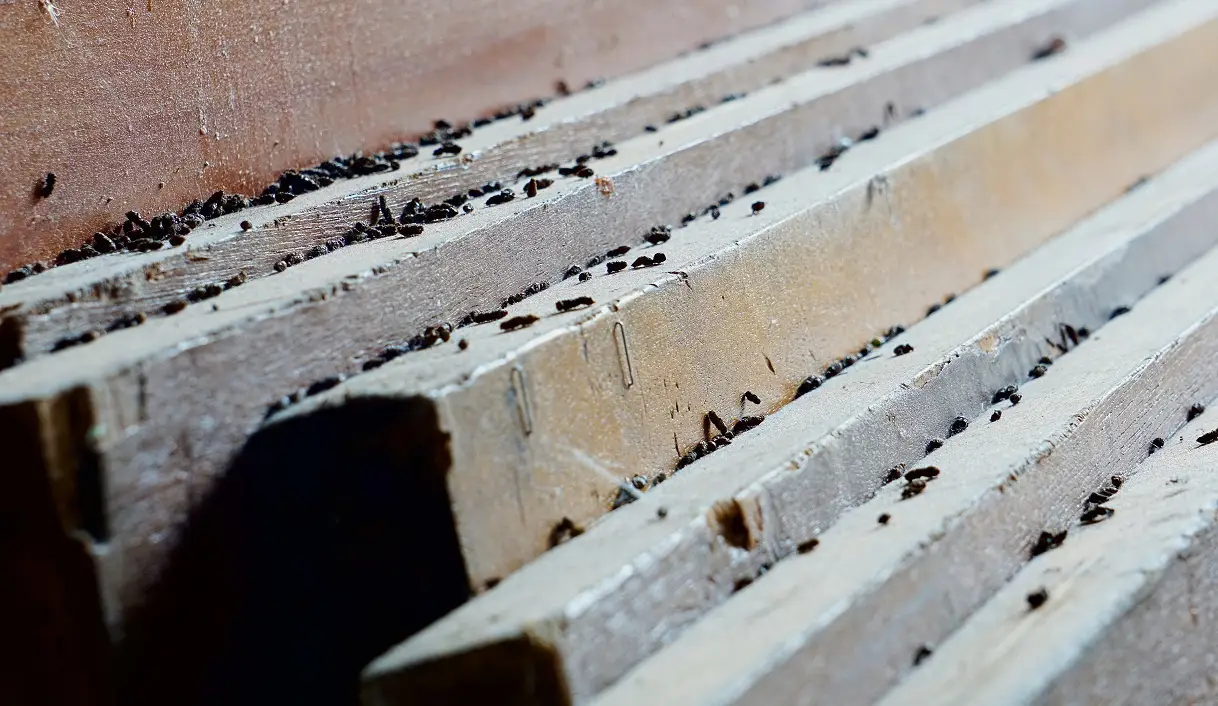
- Droppings along baseboards, in cabinets, under sinks, or in drawers – small, dark, rice-shaped
- Scratching or scurrying at night, especially in ceilings, walls, or above the pantry
- Gnaw marks on food packaging, cardboard boxes, door corners, or baseboards
- Chewed or stripped wiring in the attic, garage, or behind appliances
- Greasy rub marks along walls and pipe runs, left by oil in their fur on repeated paths
- Shredded paper, fabric, or insulation gathered into nests
- A persistent musky odor in an enclosed space like a pantry or closet
- Your dog or cat fixating on one spot on a wall or under an appliance
One or two of these means act now. Several means the population is already established.
A Mouse Only Needs a Quarter of an Inch
This is where most rodent-proofing attempts fail – people seal the obvious holes and miss the ones that don’t look like holes.
The CDC’s guidance is specific: “Mice can fit through a hole the width of a pencil (1/4 inch or 6 millimeters in diameter).” A gap you’d walk past without a thought is a front door. Rats need only modestly more, and both will gnaw a marginal opening into a usable one.
Where to Look for Entry Points
The CDC recommends checking these locations specifically.
Outside the house:
- Roof rafters, gables, eaves, and soffits
- Windows and doors missing weather stripping
- Gaps where the foundation meets the ground
- Attic and crawl space vents
- Holes cut for electrical, plumbing, cable, and gas lines
Inside the house:
- Kitchen cabinets and closet floors, especially in corners
- Behind and under appliances
- Around pipes beneath sinks and washing machines
- Water heater and furnace pipe penetrations
- Floor vents, floor drains, and the floor-to-wall junction
- Fireplaces, attics, basements, and crawl spaces
Utility penetrations are the single most productive place to look. When a line gets run, the hole is almost always cut larger than the pipe and rarely sealed properly afterward.
How to Rodent-Proof Your Home Now
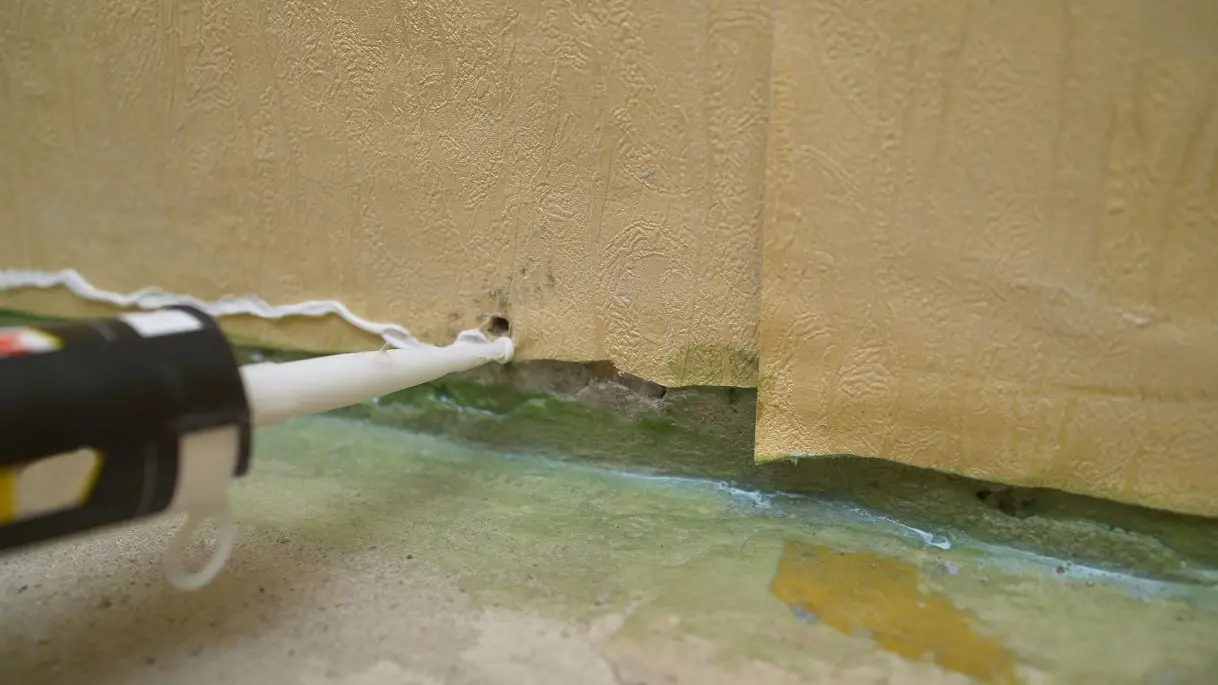
- Seal small holes with steel wool, then caulk or spray foam over it. The CDC recommends filling with steel wool first – rodents won’t chew through it – and securing it in place. Foam alone gets chewed straight through.
- Close larger openings with hardware cloth, lath screen, sheet metal, or cement. Quarter-inch hardware cloth is AgriLife’s recommended standard for rodent-resistant covering.
- Replace worn door sweeps and weather stripping. The gap under a garage door is the most common entry point on most properties.
- Screen every vent – attic, crawl space, gable, and dryer.
- Trim tree limbs back from the roof line. Roof rats travel along branches and cables; a limb touching the eave is a bridge.
- Move food into glass or metal containers. AgriLife specifically recommends rodent-proof containers, and to keep stored materials “at least 18 inches off the ground.”
- Clear the perimeter. Move woodpiles, stored lumber, and dense ground cover away from the foundation, and keep trash bins sealed and off the wall.
- Fix the water. Leaking hose bibs, dripping AC condensate lines, and standing water give rodents a reason to stay.
Clean Up Droppings the Right Way
This matters more than most people realize, and the instinct is exactly wrong.
The CDC is direct: “Don’t vacuum or sweep rodent urine, droppings, or nesting materials. This can cause tiny droplets containing viruses to get into the air.” Rodent-borne pathogens are primarily inhaled, and dry sweeping aerosolizes them.
The correct process:
- Put on rubber or plastic gloves
- Spray the droppings and urine “with bleach solution or an EPA-registered disinfectant until very wet”
- Let it soak for at least 5 minutes
- Wipe up with paper towels and dispose of them
- Mop or sponge the area with disinfectant
- Wash your hands thoroughly after removing gloves
For a homemade solution, the CDC specifies “1.5 cups of household bleach in 1 gallon of water,” mixed fresh.
A Note for Commercial Properties
Restaurants, warehouses, medical offices, and retail spaces run on a different risk profile. A single droppings sighting during a health inspection is a citation. Rodent activity in a food storage area is a shutdown risk, and in a warehouse it’s inventory loss plus chewed wiring in places nobody checks until something fails.
Commercial rodent control depends on documentation and consistency – a defined program, sealed entry points, monitored stations, and a record you can hand an inspector. That’s a maintenance relationship, not a one-time call.
When Traps Aren’t Enough
Snap traps handle a mouse or two. They don’t solve an established population, because trapping addresses the rodents currently in the room and nothing about the ones in the wall void or the gap they’re using to come and go.
It’s time to bring in a professional if you’re seeing droppings in more than one room, hearing activity in the ceiling or walls, catching rodents repeatedly in the same spot, finding chewed wiring or insulation damage, or if the activity continues through a full trapping cycle.
Real rodent control is an exclusion job first. Find and seal every entry point, remove the population inside, eliminate the food and water keeping them there, then verify nothing reopens. Skip the sealing step and you’re removing rodents from a house that’s still open.
Rodent Control FAQs
Why do mice come inside in the fall?
Mice are warm-blooded and actively seek shelter as temperatures drop and outdoor food thins out. Homes offer stable warmth, a reliable food supply, and undisturbed nesting space, which makes them a significant upgrade over outdoor habitat heading into winter.
How small a gap can a mouse get through?
According to the CDC, mice can fit through a hole the width of a pencil – about 1/4 inch, or 6 millimeters. Rats need only slightly more, and both will gnaw a small opening into a larger one.
What are the first signs of mice in a house?
Droppings along baseboards and in cabinets, scratching sounds in walls or ceilings at night, gnaw marks on packaging or trim, greasy rub marks along walls, and shredded paper or insulation used for nesting.
Should I vacuum up mouse droppings?
No. The CDC advises against sweeping or vacuuming rodent droppings, urine, or nesting material, because it puts virus-containing particles into the air. Spray with disinfectant or bleach solution, let it soak five minutes, then wipe up with paper towels while wearing gloves.
Do mice go away on their own in the spring?
No. Once a population establishes indoors with food, water, and nesting space, it has no reason to leave. Indoor conditions stay favorable year-round, and the colony continues breeding.
Seal It Before They Settle In
The window that matters is right now – before the first real cold front, while you’re still preventing an infestation instead of removing one.
Red Pest Control provides rodent control for homes and commercial properties across Fort Worth, Dallas, Arlington, Eastland County, and the greater DFW Metroplex, with same-day service available. Every property gets an assigned technician who learns the building – where the entry points are, which utility penetration keeps reopening, and what’s drawing activity in. Our treatments are family and pet safe, we’re fully licensed and insured, and we work on a handshake with no contracts. We don’t just treat symptoms. We solve the problem at its source.
Call 817.865.5251 or request a free quote and we’ll get the property sealed before the temperature drops.