
Why Are There So Many Spiders in Your House This Fall?
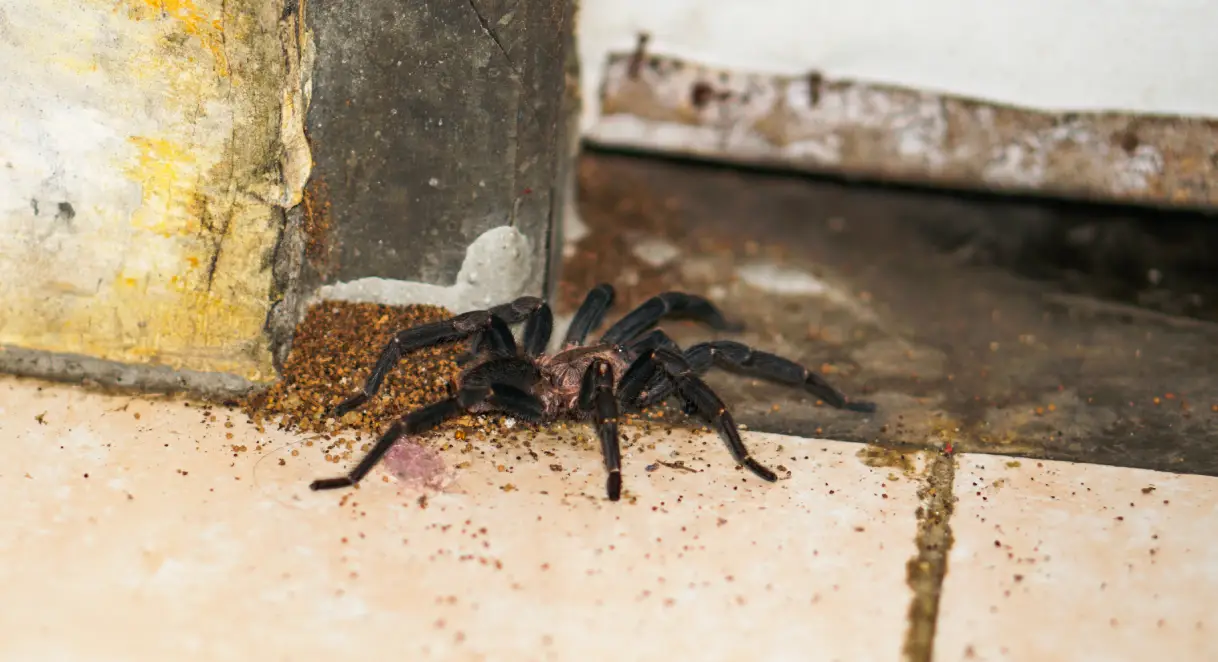
You’ve seen three in a week. One sprinting across the living room floor at 9 p.m., one in the garage, one hanging in a corner of the porch that was empty yesterday. Nothing about your house changed, but suddenly the spiders are everywhere.
You’re not imagining it, and you’re not doing anything wrong. If you’re wondering why there are so many spiders showing up right now, the answer has almost nothing to do with the weather turning – and it isn’t the invasion it feels like.
Here’s what’s actually going on, which spiders around North Texas are worth a second look, and when it stops being a nuisance and becomes something to handle.
Why Are There So Many Spiders Around Right Now?
The population didn’t spike. The behavior did.
Late summer and early fall is mating season for most of the spider species living around your home. Males that spent the year sitting quietly in a web reach maturity, abandon the web entirely, and start wandering to find females. A spider that never moved is now crossing your floor at eye level.
Rod Crawford, curator of arachnology at the Burke Museum, puts it plainly: what people notice each fall is “sexually mature males wandering in search of mates,” and it happens in “late summer (August and September) – not a notably cold time of year.”
The other half of the explanation is even more counterintuitive. Most of the spiders in your house were already in your house. Crawford’s research indicates that “generally fewer than 5% of the spiders you see indoors have ever been outdoors.” House spiders are a distinct indoor-adapted group. They live in your garage, attic, and wall voids year-round. Fall is simply when the males stop hiding.
The “Spiders Come Inside to Escape the Cold” Myth
This is the explanation almost everyone repeats, and it’s wrong.
Spiders are cold-blooded. As the Burke Museum notes, they are “not attracted to warmth. They don’t shiver or get uncomfortable when it’s cold, they just become less active and eventually, dormant.” A spider has no mechanism for noticing your house is warmer and deciding to move in.
Why it matters practically: if you believe spiders are streaming in from the yard, you’ll spend your effort sealing the house against an outdoor invasion that isn’t happening. The more productive approach targets what’s already living inside and what’s feeding it.
What’s Actually Drawing Them Toward Your House
Spiders go where the food is. Everything else is secondary.
That’s the piece most people miss this year in particular. North Texas has seen a heavy cricket population, and crickets are a primary food source for several common house spiders. A yard or garage full of crickets is an open buffet, and the spiders follow. If you’ve been dealing with more crickets than usual this year, the spider activity is a direct consequence, not a coincidence.
Other conditions that concentrate them around the house in fall:
- Exterior lighting that draws in moths, gnats, and other flying insects all night
- Leaf litter and mulch beds stacked against the foundation
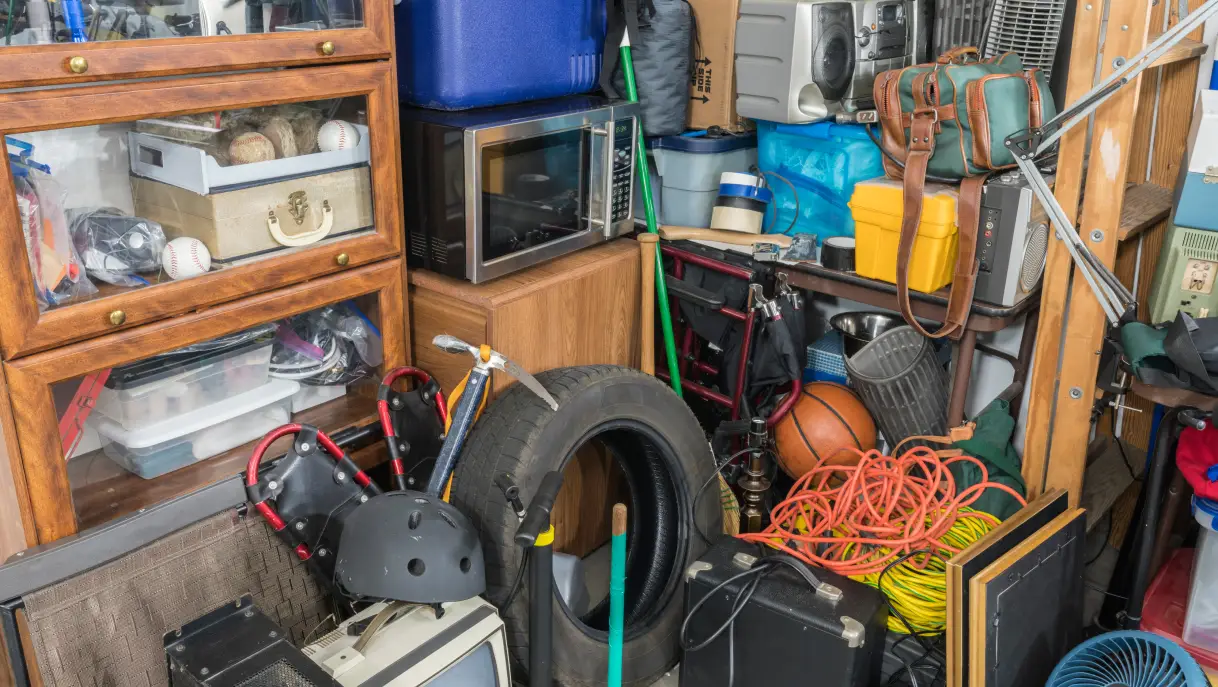
- Cluttered garages, sheds, and storage boxes that offer undisturbed harborage
- Firewood stacked against the house ahead of the first cold snap
- Cracks around door sweeps, weep holes, and utility penetrations that let wandering insects in
Cut the insect population and the spider population follows it down. That’s the whole strategy.
Common Spiders You’ll See Around North Texas Homes
The overwhelming majority of what you’ll find is harmless and, frankly, useful – these are predators eating the pests you don’t want:
- Cellar spiders – long, thin legs, messy webs in garage corners and under sinks
- Orb weavers – the large, dramatic overnight webs across your porch or between shrubs
- Jumping spiders – small, stocky, fast, often on sunny exterior walls and window frames
- Wolf spiders – big, ground-hunting, no web; the ones that sprint across the floor
- Southern house spiders – often mistaken for recluses, common in eaves and brick weep holes
None of these require intervention beyond a vacuum and a broom.
The Two That Actually Matter in Texas
The Texas Department of State Health Services identifies two medically significant spiders in the state.
Black widow – described by DSHS as “jet-black color, globular abdomen with a reddish or yellowish hourglass on the underside.” They’re found “indoors and outdoors throughout the State,” most often in “woodpiles, boxes, outdoor toilets, meter boxes, under eaves.” DSHS describes the venom as neurotoxic and “reportedly 15 times more toxic than the venom of the prairie rattlesnake.” That figure sounds alarming, and it’s worth context: black widows are non-aggressive, bite only when trapped against skin, and deliver a very small volume of venom. Bites are serious and warrant medical care, but they are rarely fatal.
Brown recluse – “golden brown in color” with a “characteristic dark brown to black fiddle-shaped pattern on the head region.” DSHS notes they “commonly live in basements and garages” and hide “between boards, boxes, and old towels and clothes.”
Both bite defensively, not offensively. The common exposure scenario is reaching into a stored box, pulling on a shoe or glove that’s been sitting in the garage, or moving a woodpile bare-handed. If you’re bitten by either, contact the Texas Poison Center Network at 1-800-POISON-1 or see a physician.
Nuisance or Actual Problem?
A quick way to sort it:
Normal fall activity – a few wandering males over several weeks, seasonal webs on the porch and eaves, occasional cellar spiders in the garage.
Worth addressing – egg sacs in multiple locations, recurring webs in the same spots after you clear them, black widows in areas your kids or pets access, any recluse activity in a garage or storage room, or spiders appearing indoors continuously rather than in a short fall burst.
The second list usually means there’s an established population with a steady food supply, and knocking down individual spiders won’t change it.
How to Cut Down on Fall Spiders
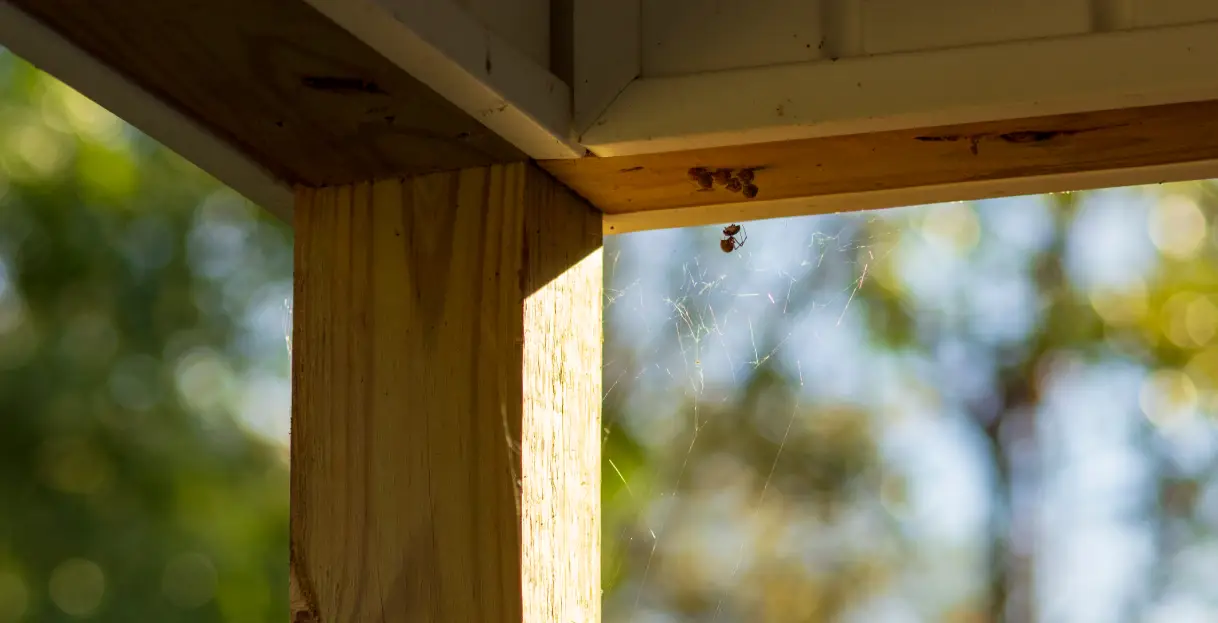
- Vacuum webs and egg sacs instead of spraying them. Removal is more effective than contact spray on webbing, and it takes the next generation with it.
- Switch exterior bulbs to yellow or LED. Fewer flying insects at the porch means fewer spiders setting up shop there.
- Declutter the garage and storage areas. Swap cardboard boxes for sealed plastic bins – this is the single biggest change for recluse risk.
- Pull mulch, leaf litter, and firewood back from the foundation. Aim for a clear, dry band around the perimeter.
- Seal door sweeps, window gaps, and utility penetrations. This blocks the insects spiders are hunting as much as the spiders themselves.
- Wear gloves when moving stored boxes, woodpiles, or anything that’s sat untouched in the garage since spring.
- Address the underlying insect population. Crickets, roaches, and gnats are the reason spiders stay. Remove the food and the predators leave.
Fall Spider FAQs
Why am I suddenly seeing so many spiders in my house?
Fall is mating season. Male spiders leave their webs to search for females, which makes them far more visible than they were all summer. The population didn’t increase – the males simply started moving around in the open.
Do spiders come indoors in the fall to escape the cold?
No. Spiders are cold-blooded and aren’t drawn to warmth. Most house spiders are an indoor-adapted group that has lived inside year-round. Fewer than 5% of the spiders you see indoors have ever been outside.
Are the spiders in my house dangerous?
Almost always no. In Texas, only the black widow and brown recluse are considered medically significant by the state health department. Cellar spiders, orb weavers, jumping spiders, and wolf spiders are harmless to people.
Does spider spray actually work?
Only partially. Spiders don’t groom themselves like insects do and have limited contact with treated surfaces, so a broad spray alone rarely solves it. Effective spider control combines web and egg sac removal, treating harborage and entry points, and reducing the insects they feed on.
Getting the Spiders Under Control
If it’s a few wandering males in October, wait it out – they’ll be gone in a few weeks. If you’re finding egg sacs, black widows near where your family spends time, or spiders returning to the same spots no matter how often you clear them, that’s an established population with a reliable food source.
Red Pest Control handles spider control across Fort Worth, Dallas, Arlington, Eastland County, and the greater DFW Metroplex. Every property gets an assigned technician who learns your home – where the harborage is, which insects are feeding the population, and what changes season to season. Our treatments are family and pet safe, we’re fully licensed and insured, and we work on a handshake with no contracts. We don’t just treat symptoms. We solve the problem at its source.
Call 817.865.5251 or request a free quote.